From Fragmentation to Focus: How Unified Donor Data Transforms Nonprofit Engagement
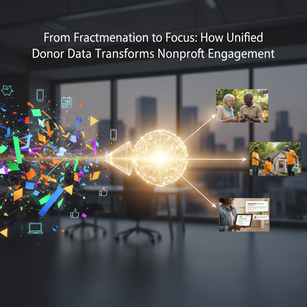
Nonprofit organizations are built on relationships — with donors, volunteers, partners, and the communities they serve. Yet many of these organizations are hamstrung by fragmented supporter data stored in multiple systems, spreadsheets, and siloed programs. That fragmentation makes it difficult to recognize supporters across touchpoints, to understand their interests and histories, and to deliver communications that feel timely and relevant. The result is missed opportunities: lower engagement, weaker retention, declining lifetime donor value, and campaigns that underperform. Addressing this challenge requires a strategic approach to data unification that preserves privacy, leverages intelligence, and operationalizes insights across fundraising, marketing, volunteer coordination, and stewardship. When done correctly, unified data becomes more than a database; it becomes the foundation for sustained, personalized relationships that drive greater impact.
Nonprofits struggle with fragmented supporter data, limiting personalized engagement. Microsoft Dynamics 365 Customer Insights unifies donor and volunteer data with AI, creates persistent profiles and predictive insights, enabling GDPR‑compliant personalized campaigns across channels to boost engagement, retention, and donations. At its core, the platform ingests data from CRM systems, fundraising platforms, event registries, email service providers, and even offline sources, matching records to create persistent, 360-degree profiles for each supporter. Those profiles aggregate giving history, volunteer activities, event attendance, campaign responses, engagement frequency, and demographic or affinity signals, producing a single view that is significantly richer than any one source. Artificial intelligence then enriches those profiles, filling gaps, resolving duplicates, and surface predictive signals such as likelihood to give, propensity to volunteer, or churn risk — insights that can be translated into precise action.
The power of persistent profiles and AI-driven predictive insights lies in operationalizing them across channels in a privacy-first way. With unified profiles, nonprofits can segment supporters by nuanced behaviors (e.g., monthly donors who attended a specific event and opened recent emails) rather than crude lists. Predictive scoring allows organizations to prioritize outreach — identifying those most likely to upgrade their giving, those at risk of disengaging, or those likely to respond to a specific campaign. Dynamics 365 Customer Insights integrates with marketing automation and engagement platforms to orchestrate GDPR-compliant campaigns across email, SMS, social, direct mail, and call center workflows. Consent and preference management are built into the process, ensuring that personalization respects communication choices and legal obligations. The result is communications that feel relevant and timely: a renewal appeal that references a donor’s recent volunteer shift, an event invitation targeted to local supporters with a history of in-person attendance, or a stewardship message tailored to the impact areas a supporter has previously funded.
Moving from fragmented sources to actionable personalization requires pragmatic implementation steps and organizational alignment. Start by mapping all supporter data sources and defining key identity and behavior attributes you want in persistent profiles. Prioritize data cleanup and establish matching rules to reduce duplicates and maintain data quality over time. Implement Dynamics 365 Customer Insights or a similar solution in iterative phases, beginning with one use case — for example, reducing donor churn by targeting lapsed monthly donors — and expand to additional scenarios like volunteer recruitment or major-gift cultivation. Integrate consent records and privacy preferences at the ingestion layer to enable GDPR-compliant processing and to build trust with supporters. Train fundraising, marketing, and volunteer teams on how to interpret predictive scores and to design campaigns that leverage those insights. Establish governance: assign data stewards, document data flows, and schedule regular audits to ensure integration pipelines are healthy and scores remain calibrated. Finally, measure outcomes with the same rigor used in program evaluation — track open and response rates, retention, average gift size, and lifetime value improvements attributable to unified data initiatives, and use those metrics to iterate on audience definitions and creative strategies.
The strategic payoff for nonprofits that unify donor and volunteer data is both measurable and mission‑amplifying. Personalized, predictive engagement improves donor acquisition and retention while reducing the cost of outreach through better targeting. Volunteers receive invitations that match their interests and availability, increasing participation and satisfaction. Major gift officers gain a more complete context for relationship-building conversations. Importantly, when personalization is delivered in a GDPR‑compliant manner, it strengthens supporter trust, an often-overlooked intangible that correlates with long‑term giving. Organizations that invest in persistent profiles and AI-driven insights find they can move from one-size-fits-all appeals to a lifecycle approach: welcoming new supporters with appropriate onboarding, nurturing mid-level donors with tailored stewardship, and engaging major donors with bespoke cultivation plans. Over time, these improvements compound — higher retention leads to predictable revenue, which sustains programs and enables strategic planning.
Unifying supporter data is not a one-time IT project; it’s an organizational transformation that blends technology, process, and culture. Tools like Microsoft Dynamics 365 Customer Insights provide the technical foundation — persistent profiles, AI-driven enrichment and prediction, and GDPR-aware campaign orchestration — but success requires a commitment to data quality, cross-team collaboration, and continuous measurement. By treating unified data as a living asset and embedding insights into everyday engagement workflows, nonprofits can make communications feel more human, respectful, and relevant. That shift elevates the supporter experience, increases engagement and donations, and ultimately enables nonprofits to focus resources where they matter most: delivering mission-driven impact.