Designing Trust: Practical Web Strategies for Nonprofits
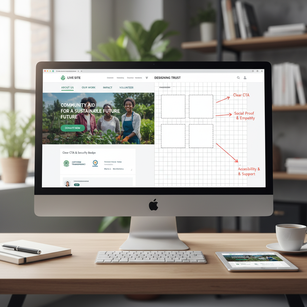
A nonprofit’s website is often its first and most enduring impression — a place to explain purpose, build credibility, and turn casual visitors into supporters. Start by stating your clear mission in plain language, near the top of the homepage and on a dedicated “About” page. A concise mission statement paired with a brief tagline and a visible impact summary helps visitors immediately grasp why your organization exists and what it accomplishes. Equally important is accessible responsive design: your site must work well on phones, tablets, and desktops, meet basic accessibility standards (alt text, keyboard navigation, readable contrast and scalable fonts), and load quickly. Slow or inaccessible sites erode trust and frustrate users, especially donors and volunteers who often make quick judgments about credibility. Create a consistent, user-centered navigation structure so people can find programs, volunteer opportunities, donation options, and contact information in three clicks or fewer. Above all, orient the site around the people or cause you serve — use human-centered language and design choices that prioritize clarity over cleverness.
Compelling visuals and engaging content work together to tell your organization’s story and motivate action. Use high-quality photos and brief videos that depict real beneficiaries, staff, and volunteer activities; authentic imagery communicates impact faster than text alone. Pair visuals with concise, emotionally resonant stories and data points that show outcomes: rather than only saying you “help,” demonstrate how many lives were changed, how funds were used, and what specific programs achieved. Testimonials from beneficiaries, volunteers, and donors lend social proof and credibility; feature rotating quotes and short case studies on the homepage and program pages. Don’t forget volunteer info: provide a dedicated volunteer section with clear role descriptions, time commitments, eligibility requirements, and an easy application or sign-up form. Content should be scannable — use headings, bullet lists, and short paragraphs — and updated regularly with news, success stories, and calls for participation so repeat visitors find fresh reasons to engage.
Convert intent into action with strong CTAs and donor-friendly donation options. CTAs should be visually distinct, use action-driven verbs (Donate Now, Join as a Volunteer, See Our Impact), and appear in multiple places: the header, end of program pages, blog posts, and pop-up banners when appropriate. Simplify the donation flow: allow recurring gifts, suggested giving levels tied to specific outcomes (“$50 feeds X children”), and provide options for credit card, ACH, PayPal, and mobile wallets. Ensure your giving form is short, secure (SSL, PCI compliance where applicable), and optimized for mobile; consider integrating autofill and progress indicators for multi-step forms. Offer donor recognition options and transparent receipts that immediately confirm tax-deductible status and describe how the gift will be used. For larger donors, provide information on planned giving, major gifts, and sponsorship opportunities with a clear point of contact. Minimizing friction and maximizing clarity in the donation experience significantly increases conversion rates and donor retention.
Financial transparency and clear reporting cement long-term trust and encourage larger commitments. Publish easily accessible financial documents: current budgets, annual reports, audited financial statements, and IRS Form 990 (or equivalent local filings). Present key financial metrics and program spending in an intuitive format — dashboards, infographics, or a short “by the numbers” section can make complex information digestible. Explain how funds are allocated and the impact they produce, and be honest about challenges and how you address them; donors value candor. Provide a governance page listing board members, leadership bios, and conflict-of-interest policies to reinforce accountability. Include a privacy policy and data handling statement that explains how donor information is used, stored, and protected. Together, these practices reduce skepticism and help potential supporters feel confident that their contributions are making a measurable difference.
Finally, stitch your site into a broader engagement ecosystem through social media integration, easy contact, and continuous optimization. Embed social feeds, include share buttons on stories and impact pages, and provide clear pathways from social posts back to specific actions on your site. Make contact effortless: list phone numbers, a staffed email address, a contact form, and office hours; for volunteer managers and major-donor staff, include direct email and scheduling links. Prioritize SEO basics so people searching for services, volunteer opportunities, or ways to give can find you; use descriptive page titles, meta descriptions, and accessible image tags. Use analytics and A/B testing to learn which pages convert and which messages perform best, then iterate. Finally, establish a maintenance routine: backup policies, content review schedules, and security updates. A well-designed, transparent, and user-focused nonprofit website becomes more than an information hub — it becomes a reliable platform for building trust, mobilizing support, and growing sustainable fundraising and volunteer engagement.