Designing Websites That Amplify Your Mission
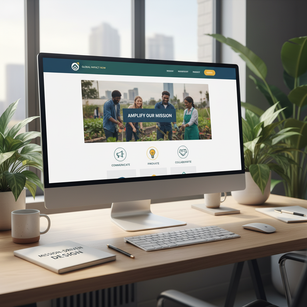
A nonprofit website is more than a digital brochure; it is the central hub where mission, community, and action meet. A nonprofit website should raise awareness, build connections, and drive action by clearly communicating mission, engaging supporters, and enabling meaningful interactions. That single sentence summarizes the purpose of every element on the site, from the headline and imagery to forms and donation buttons. When organizations treat their website as the frontline of outreach, they improve visibility with potential donors, volunteers, beneficiaries, and partners. The homepage should immediately tell visitors who you are and why your work matters, using concise language, evocative visual storytelling, and a clear hierarchy of information. Thoughtful navigation, consistent branding, and a compelling value proposition reduce friction for new visitors and invite deeper exploration. At the same time, accessibility and mobile responsiveness ensure people with different abilities and devices can participate fully, transforming casual interest into meaningful engagement.
Communicating mission clearly requires deliberate choices in messaging and structure. Begin with a strong, emotionally resonant headline that encapsulates impact rather than process—describe the change you create rather than only the services you provide. Follow that with a succinct mission statement and a short “how it works” section that answers common questions: Who do you serve? What difference do you make? How can someone get involved? Use stories and data together: testimonial quotes and beneficiary stories humanize your cause, while impact metrics and infographics provide credibility. Make content scannable with subheads, bullet points, and clear calls-to-action (CTAs). Search-engine optimization (SEO) should not be an afterthought; optimizing page titles, meta descriptions, and headings for key phrases helps people find your site when they search for local services, volunteer opportunities, or ways to give. Investing in plain-language copy and multiple content formats—video, podcasts, downloadable reports—broadens reach and makes the mission accessible to varied audiences.
Building connections goes beyond gathering email addresses; it’s about forging trust and community. Offer multiple, low-friction ways to connect—newsletter signup, volunteer interest forms, social media links, and easy contact options—so visitors can choose their preferred level of involvement. Personalization enhances retention: segment communications based on expressed interests, donation history, or event attendance so supporters receive relevant updates. Highlight social proof with donor lists, partner logos, award badges, and outcome stories that demonstrate impact. Create spaces for two-way interaction, such as comment-enabled blog posts, discussion forums, or volunteer coordinators’ office hours. For recurring volunteers and donors, consider member portals where supporters can manage profiles, RSVPs, and recurring gifts. These connections are strengthened by transparent governance and reporting: publish annual reports, financial summaries, and program evaluations to show stewardship and foster long-term confidence.
Driving action requires a design and technical setup that minimizes friction at critical moments. The donation flow, for many nonprofits, is the most consequential user journey: reduce steps, offer suggested giving levels with impact descriptions, enable recurring gifts, and provide multiple payment options. Clearly labeled, persistent CTAs—like “Donate,” “Volunteer,” or “Get Help”—should appear in the header and throughout content. Event signups should be mobile-friendly and integrated with calendar invites and reminders. For prospective volunteers, present clear role descriptions, time commitments, and expectations up front to reduce uncertainty. Implement micro-actions to engage visitors who aren’t ready to give money: petition signatures, email templates to contact policymakers, social shares with pre-populated text, and short surveys. Technical best practices—fast page load times, secure HTTPS, browser caching, and minimal third-party scripts—reduce abandonment. Use analytics and A/B testing to iterate on messaging and layout; track conversion rates for donations, signups, and email confirmations so you can continuously improve the paths that matter most.
Sustained impact comes from investing in best practices that combine design, content strategy, and local outreach. Investing in best practices increases impact and engagement. That investment pays off through higher conversion rates, stronger supporter retention, and clearer public understanding of your work. Maintain a content calendar, perform regular accessibility audits, and schedule security updates to keep the site reliable and inclusive. Leverage storytelling campaigns around measurable outcomes—case studies, videos, and photo essays—to create seasonal fundraising surges and volunteer drives. Consider partnerships with marketing and communications professionals who understand nonprofit constraints and can tailor strategies accordingly. Local marketing and visual communications services available in Burlington, New Jersey. Working with a local firm has advantages: they bring regional insight, community connections, and the ability to meet in person for strategy sessions or events. Whether you’re an emerging grassroots group or a long-standing organization, thoughtful investment in your website and local outreach amplifies your capacity to fulfill your mission.
A nonprofit website that raises awareness, builds connections, and drives action is both a technical platform and a living expression of organizational values. Start with mission clarity, design for empathy and usability, enable meaningful interactions, and measure outcomes so every update is intentional. Prioritize accessibility, mobile performance, and security, and make content approachable and sharable to broaden your supporter base. Use analytics to identify bottlenecks and test improvements; celebrate small wins and document lessons learned. Finally, recognize that a website is not a one-time project but an ongoing commitment that benefits from periodic renewals and partnerships with local experts. By treating your site as an investment in community impact rather than a cost center, you create a durable tool that mobilizes supporters, deepens trust, and accelerates progress toward your goals.