Turning Scattered Supporter Data into Meaningful Donor Relationships
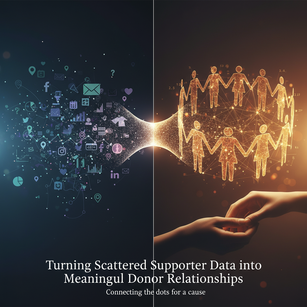
Nonprofit organizations today face a paradox: supporters are more connected than ever, yet their data is often scattered across disparate systems, inhibiting the very personalization that drives engagement. Donors and volunteers expect communications that recognize their history, preferences, and motivations, but legacy CRMs, event platforms, email lists, and volunteer management systems rarely talk to one another in a way that produces a single, accurate view. This fragmentation makes it difficult to tailor appeals, steward recurring gifts, or mobilize volunteers at the right moment. The consequence is missed opportunities—lower retention, lower lifetime value, and weakened relationships that undermine mission impact. For nonprofits seeking to deepen supporter relationships, the strategic imperative is clear: unify supporter data into a single, actionable profile that enables personalized experiences at scale.
Microsoft Dynamics 365 Customer Insights addresses this need by creating a consolidated customer intelligence layer that unifies and enriches supporter profiles. By ingesting data from multiple sources—donor databases, marketing automation tools, event registrations, volunteer scheduling apps, and even social engagement—Customer Insights stitches together fragmented records into a real-time, comprehensive profile. AI-driven identity resolution reconciles duplicate records and fills gaps, producing a 360-degree view that is practical for front-line fundraisers and marketers. Enrichment capabilities augment internal data with behavioral signals and inferred preferences, enabling a richer understanding of what drives each donor or volunteer. This unified profile is foundational: only when nonprofits can reliably see who their supporters are can they begin to personalize outreach with confidence.
Beyond unification, the platform leverages AI to surface predictive insights critical to donor retention and revenue growth. Customer Insights can predict churn risk and estimate donor lifetime value, giving development teams a prioritized list of supporters who need attention and those likely to yield the greatest long-term impact. Predictive scoring enables timely interventions—segmenting at-risk donors for re-engagement campaigns, identifying high-potential volunteers for leadership cultivation, or tailoring upgrade asks for mid-level donors approaching a higher giving tier. These forecasts are not static; they update as new data arrives, allowing nonprofit teams to act on evolving trends rather than historical snapshots. The predictive layer transforms fundraising from reactive to proactive, optimizing resource allocation and improving ROI on outreach efforts.
Delivering personalization requires not only insight but action. Dynamics 365 Customer Insights empowers nonprofits to operationalize tailored outreach across channels—email, SMS, social, direct mail, and even peer-to-peer fundraising platforms—so communications feel relevant and timely. With integration to marketing automation and engagement tools running on Microsoft Azure, nonprofits can orchestrate journeys that adapt to supporter behavior: automated stewardship sequences for new donors, volunteer reactivation flows based on recent participation, or segmented appeals that reflect giving history and propensity. The platform’s connector ecosystem enables these journeys to be executed without pulling supporters into one-size-fits-all campaigns, ensuring the right message reaches the right person through their preferred channel. This omnichannel capability is essential for meeting supporters where they are and increasing the likelihood of conversion and ongoing engagement.
Security, privacy, and compliance are non-negotiable for organizations handling sensitive supporter data. Built on Azure, Dynamics 365 Customer Insights benefits from enterprise-grade infrastructure and GDPR-compliant security controls, giving nonprofits confidence that their unified profiles are protected and governed. Role-based access, data encryption, and audit trails help maintain accountability and meet regulatory obligations, including donor consent management and data subject rights. Implementing a compliant architecture also supports trust-building with donors—transparent data practices and secure handling reinforce the organization’s stewardship promise. For nonprofits ready to make the shift, the pragmatic path begins with identifying data sources, defining key supporter personas and metrics (like churn and lifetime value), and piloting the unified profile for a segment of donors or volunteers. With clear KPIs and iterative refinement, organizations can scale personalized donor engagement that boosts retention, increases donations, and strengthens long-term relationships in service of their mission.